The Great Wall was built to divide. For centuries it stood as one of humanity’s greatest barriers, thousands of miles of stone raised across the mountains to keep the settled empire and the nomad world apart, to separate “us” from “them.” Few structures on earth were ever built with such a clear intention to keep people out.
And yet today it does the opposite. The Wall now draws people of every nation, culture, and faith to stand together on the same weathered stones, sharing water on a steep climb and marveling at the same view. A barrier built to keep people apart has quietly become a place that builds bridges between them. There is deeper history in that too, because the Wall guarded the Silk Road, the great artery along which Buddhism, Islam, and countless ideas and religious traditions crossed into China over the centuries.
Here is the thing most first-time visitors do not realize: the Great Wall is not a single place. It is many sections, and the ones near Beijing each have a completely different character. Choosing the right one is the whole game.
A few things shape a good visit. Pick the section that matches you, since crowds, hiking difficulty, and accessibility vary enormously. Sort your transport, because the Wall is well outside Beijing. Time it to avoid the worst crowds. And be honest about your fitness, because the wild sections are no joke. Here are the best sections to experience, ranked from easy to adventurous.
1. Compare and Book It All in One Place
The Wall has half a dozen worthwhile sections near Beijing, each a different distance, difficulty, and vibe, reached by tour, train, or bus, through countless operators. Sorting that from home is genuinely confusing. Great Wall of China Beijing Tours is a platform built around exactly this, so instead of guessing you get the sections and tours laid out clearly by difficulty, travel time, and what each includes.
The value is that it matches the section to your group and your goals, first-timers to easy restored walls, hikers to the wild ones, and handles the transport that is the real hassle. You can weigh a family-friendly section against a serious hike, and book a reputable operator rather than a random listing.
You can compare Great Wall sections and tours here and choose the right one before you go, which matters more than people expect given how different the sections are.
Best for anyone who wants the right section without the research spiral. If you already know where you want to go, book directly.
2. The Best All-Rounder: Mutianyu
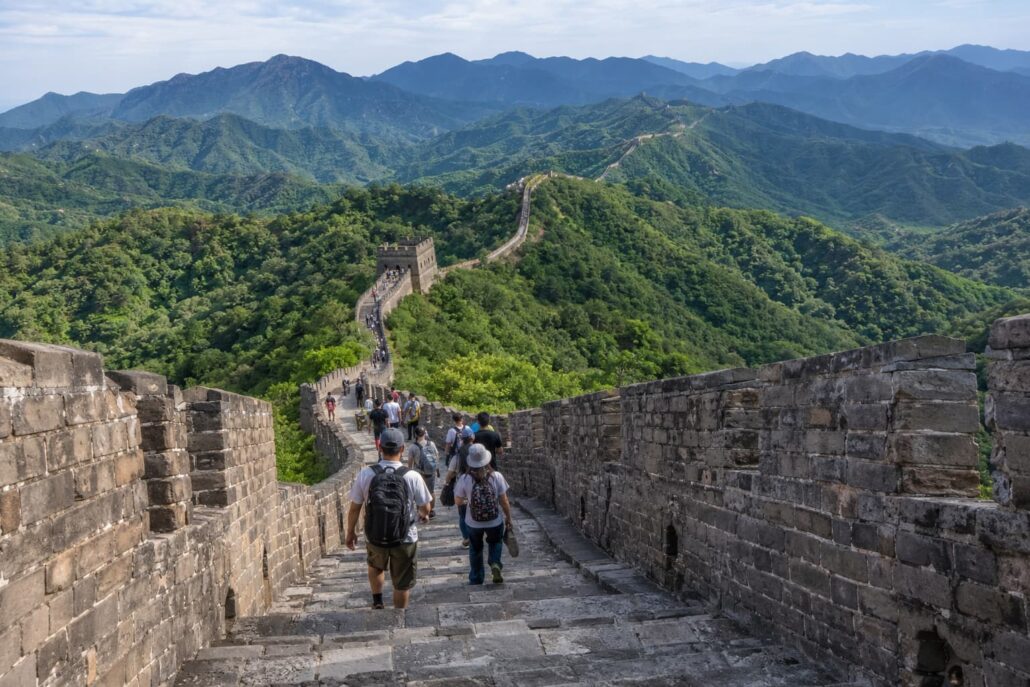
For most visitors, this is the one. About 90 minutes from Beijing, Mutianyu is a beautifully restored stretch of Ming wall winding through forested hills, with 23 watchtowers packed densely along it. It has a cable car up and, best of all, a toboggan slide down, which makes it a hit with kids and a joy for everyone else.
The slopes are gentle enough for families and older travelers, the crowds are noticeably thinner than at Badaling, and the setting is simply lovely. Entry is modest, around ¥40. If you want the classic Great Wall experience without extreme effort or extreme crowds, start here.
The trade-off is that it is fully restored, so it lacks the raw, ruined atmosphere some travelers crave.
Best for first-timers, families, and anyone wanting the best balance of scenery, access, and calm.
3. The Classic and Closest: Badaling
Badaling is the postcard. The most famous and most restored section, it sits closest to Beijing, reachable in about an hour and even by high-speed train, which makes it the go-to for a half-day visit. This is the grand, imposing wall where visiting world leaders are photographed, and it is the only section with proper wheelchair and stroller access.
It is also, by a wide margin, the most crowded part of the entire Wall. If you go, arrive before 8am and accept the crowds as part of the experience.
The convenience is unmatched, but so is the crush of people, which can dull the magic.
Best for travelers short on time or with mobility needs who want the iconic, accessible wall.
4. The Hiker’s Dream: Jinshanling
Ask serious hikers and photographers, and they will point you straight to Jinshanling. Farther out, roughly two to two and a half hours from Beijing, it is partly restored and partly wild, with the Wall snaking along dramatic ridgelines past rugged watchtowers, and a fraction of the crowds you find closer in.
This is where the truly spectacular photos come from, especially at sunrise and sunset. You can walk for hours and settle into an almost meditative rhythm, and the classic Jinshanling-to-Simatai route is one of the great walks in China. Many people stay overnight at nearby Gubei Water Town.
It takes longer to reach and has fewer facilities, and there is real climbing involved.
Best for hikers and photographers who want beauty, space, and solitude.
5. The Wild and the Night Wall: Jiankou and Simatai
For the adventurous, two sections stand apart. Jiankou is the wild wall, completely unrestored, crumbling, steep, and dramatic, the source of those iconic ruined-wall images. It is genuinely challenging and even dangerous in places, strictly for fit, experienced hikers with a head for heights, and not for anyone with mobility concerns.
Simatai, meanwhile, offers something no other section does: an official night visit, where the Wall is illuminated against the dark hills for a magical, quieter experience. It is steep and rugged, sits beside Gubei Water Town, and the night tours are capped and must be booked well in advance.
Both demand more, in fitness or in planning, but both reward it richly.
Best for experienced adventurers, photographers, and anyone chasing a rare night-time or wild-wall experience.
A Few Practical Things Before You Go
Choosing your section is the single most important decision. First-timers and families are happiest at Mutianyu or Badaling, hikers and photographers should make the trip to Jinshanling, adventurers head to Jiankou, and anyone wanting a night visit goes to Simatai.
Plan your transport, because every section is one to two and a half hours from central Beijing. A guided tour or private driver is the easiest option, the high-speed train works well for Badaling, and public buses reach Mutianyu and Badaling for the budget-minded.
Time it for spring, roughly April to June, or autumn, September to November, when the air is clear and the scenery is at its best. Avoid the summer heat and, above all, the Chinese national holidays like the October Golden Week, when crowds are overwhelming. Arrive near opening on a weekday for the calmest experience, and bring water, sun protection, and sturdy shoes. For background, UNESCO’s page on the Great Wall is worth a read, as is its listing for the Silk Roads the Wall once guarded. Both pair well with any related history or travel guides already on the site.
Choosing the Right One for You
The Great Wall rewards travelers who match the section to who they are.
Start by comparing your options through Great Wall of China Beijing Tours so you pick the right section and sort the transport. Want the best all-round day, go to Mutianyu. Short on time, take the train to Badaling. Craving a real hike and empty photos, make the trip to Jinshanling. Chasing wildness or a night on the Wall, choose Jiankou or Simatai.
However you do it, remember what you are standing on. You came to see a wall built to keep the world apart, and you will leave having stood on it shoulder to shoulder with people from every corner of that same world. Few places turn their own history so completely on its head.
Author note: recommendations here are based on the main Beijing-area sections and reputable operators. Prices, transport options, and access change, so confirm the current details before you go.